Introduction, Spine Anatomy, Causes of Scoliosis and Why It Causes Pain
Primary Keywords: Scoliosis treatment in Dehradun, spine pain treatment, physiotherapist in Dehradun, scoliosis physiotherapy, posture correction, spinal rehabilitation
Secondary Keywords: Adult scoliosis, spinal deformity, non-surgical scoliosis treatment, back pain physiotherapy, osteopathy in Dehradun
Understanding Scoliosis: More Than Just a Curved Spine
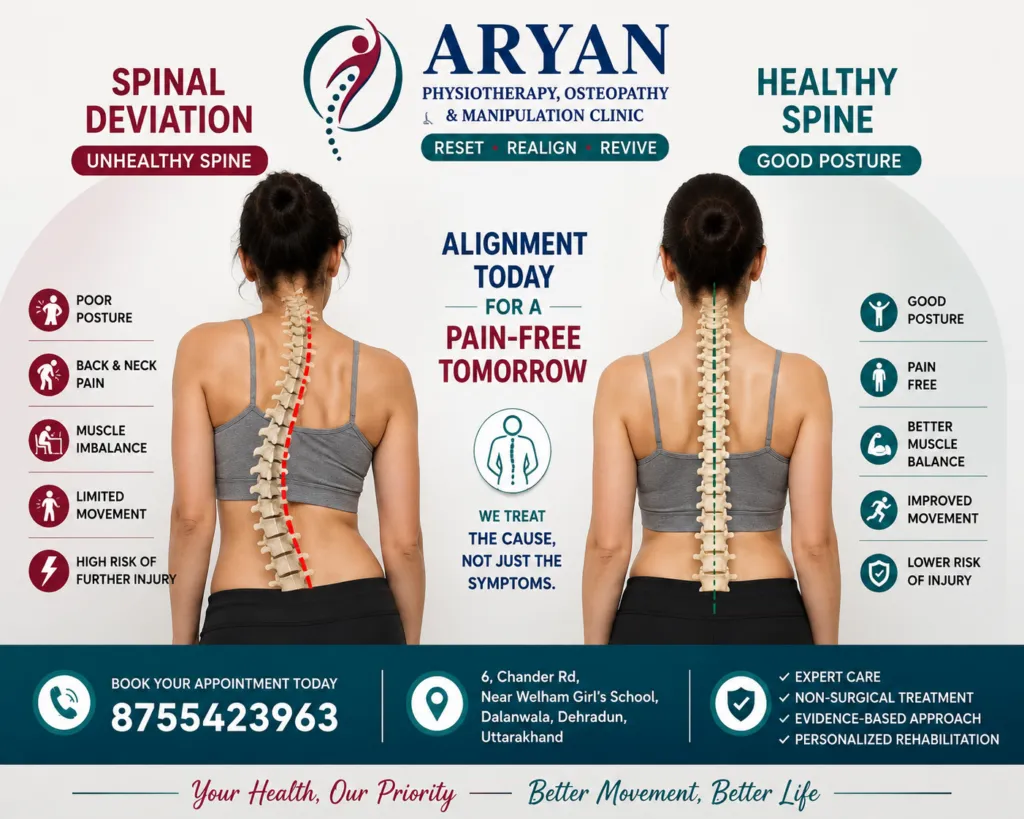
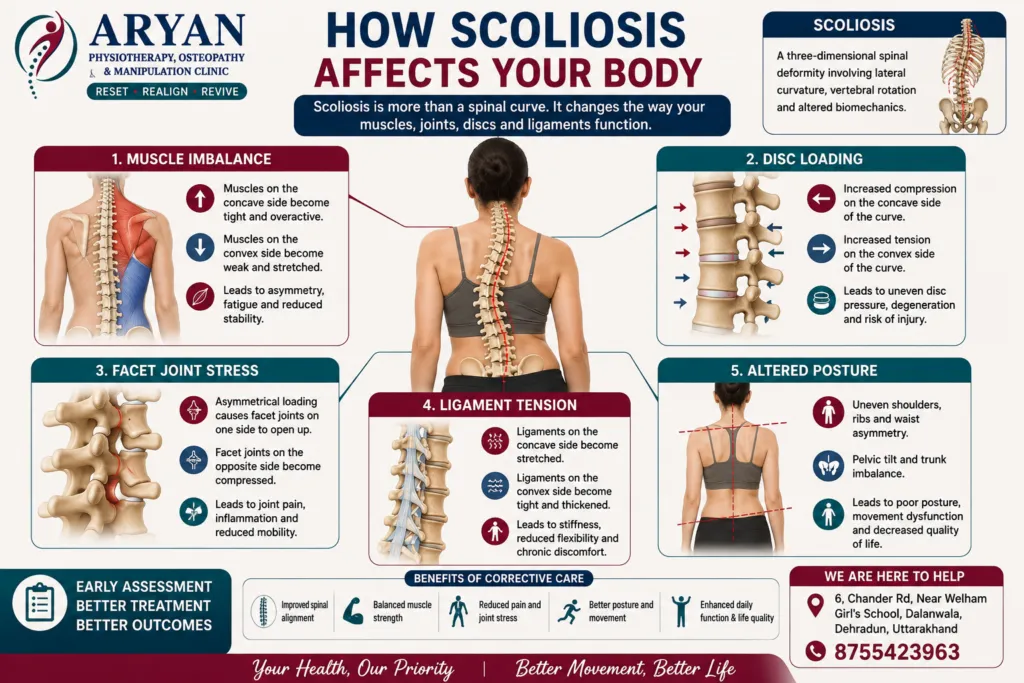
Scoliosis is often described as an abnormal sideways curvature of the spine. However, modern research shows that it is a three-dimensional deformity involving lateral curvature, vertebral rotation, and changes in the normal spinal curves (kyphosis and lordosis). Rather than being simply a “crooked back,” scoliosis affects the biomechanics of the spine, muscles, ligaments, joints, nervous system, breathing mechanics, posture, and overall movement patterns.¹
For many people, scoliosis develops gradually and may go unnoticed during its early stages. Some individuals experience little or no pain initially, while others develop persistent neck pain, mid-back pain, lower back pain, muscle fatigue, stiffness, balance problems, or reduced functional capacity. Adults with untreated or progressive scoliosis often seek medical care because of chronic pain, postural imbalance, and limitations in daily activities.
At Aryan Physiotherapy, Osteopathy & Manipulation Clinic, Dalanwala, Dehradun, we believe that successful management begins with identifying the underlying cause of spinal dysfunction rather than focusing only on symptom relief. Every patient undergoes a detailed clinical assessment to determine the factors contributing to pain, movement restrictions, and postural changes before an individualized rehabilitation plan is developed.
What Is Scoliosis?
The Scoliosis Research Society (SRS) defines scoliosis as a spinal curvature with a Cobb angle of 10° or greater measured on standing radiographs.² While this definition is useful for diagnosis, it does not fully describe the complex biomechanical changes occurring within the spine.
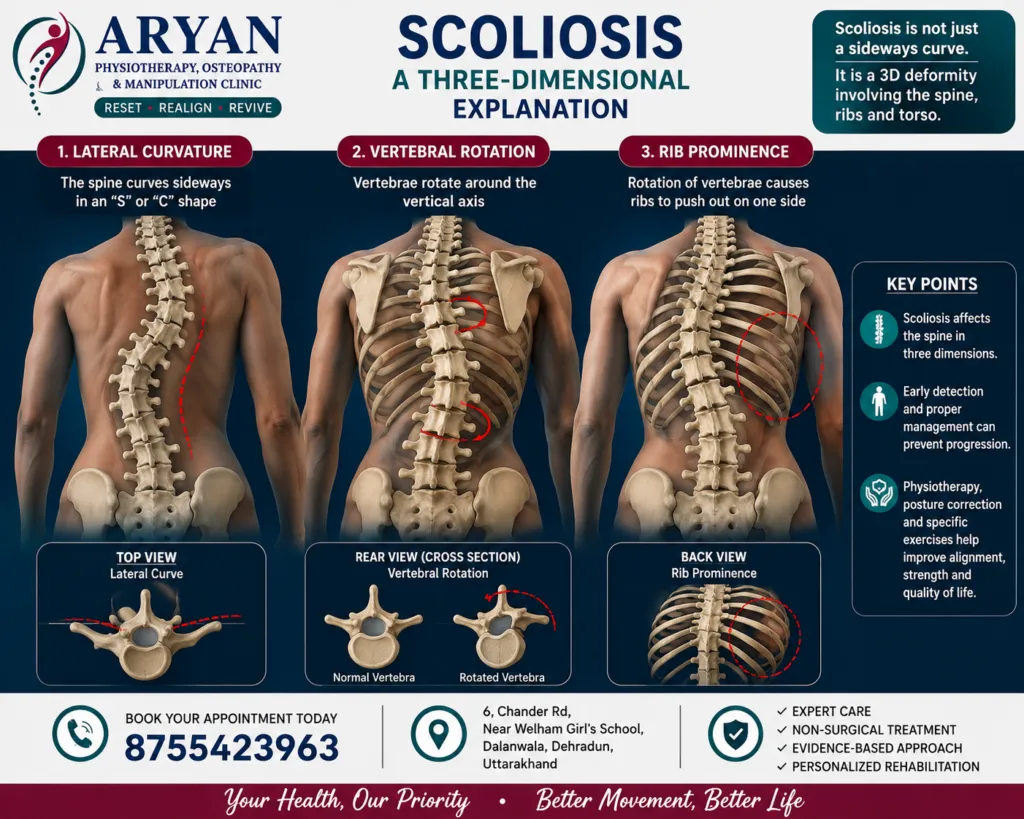
Scoliosis involves three primary structural changes:
- Lateral deviation of the vertebral column in the frontal plane.
- Axial rotation of the vertebrae, causing rib prominence or trunk asymmetry.
- Alteration of normal spinal curves, affecting thoracic kyphosis and lumbar lordosis.
These structural changes influence how forces are distributed across the spine, leading to asymmetrical loading of discs, facet joints, muscles, and ligaments. Over time, these adaptations may contribute to pain, stiffness, fatigue, and functional impairment.
Normal Anatomy of the Human Spine
The vertebral column is one of the body’s most remarkable biomechanical structures. It provides stability while allowing flexibility and protecting the spinal cord.
A healthy adult spine contains 33 vertebrae, grouped into:
- 7 Cervical vertebrae
- 12 Thoracic vertebrae
- 5 Lumbar vertebrae
- 5 Sacral vertebrae (fused)
- 4 Coccygeal vertebrae (fused)
Between most vertebrae are intervertebral discs, which act as shock absorbers and distribute compressive forces during movement.
Supporting structures include:
- Ligaments
- Facet joints
- Deep stabilizing muscles
- Superficial movement muscles
- Fascia
- Neural tissues
- Thoracic cage
Together, these structures create a highly efficient load-bearing system capable of maintaining upright posture while allowing movement in multiple planes.
Why Does the Spine Curve?
A common question patients ask is:
“Why does my spine become curved?”
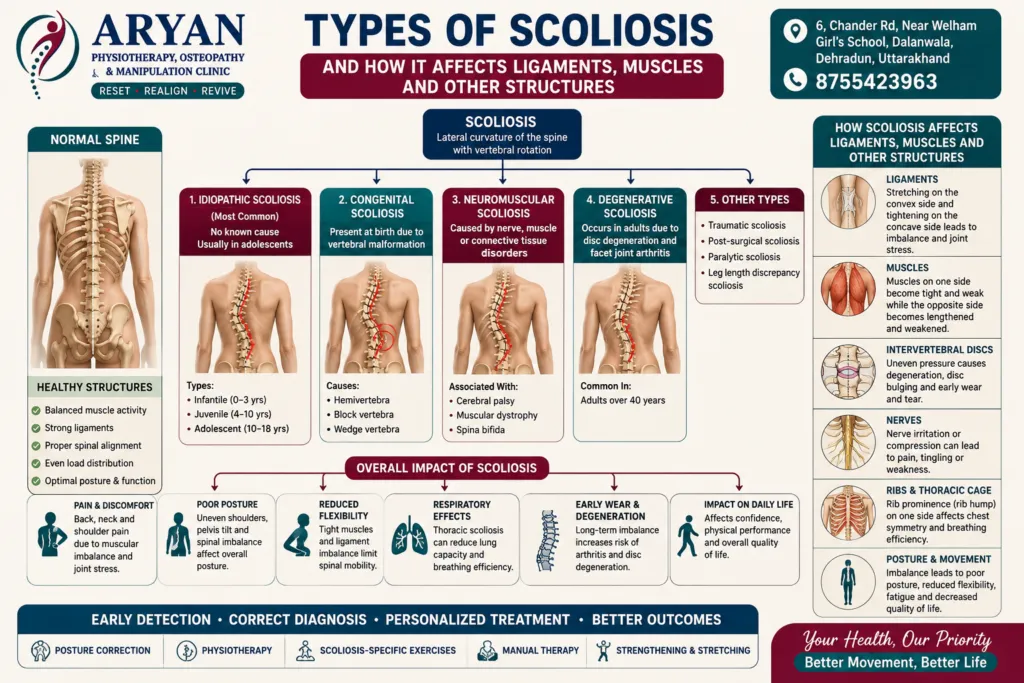
The answer depends on the type of scoliosis. Current evidence recognizes several categories:
1. Idiopathic Scoliosis
The most common type, accounting for approximately 80% of scoliosis cases, has no single identifiable cause. Research suggests that genetics, growth patterns, neuromuscular control, hormonal influences, and altered proprioception may all contribute.³
2. Congenital Scoliosis
This develops before birth because of abnormal vertebral formation or segmentation during fetal development.
3. Neuromuscular Scoliosis
Associated with neurological conditions such as cerebral palsy, muscular dystrophy, or spinal muscular atrophy, where muscle imbalance affects spinal alignment.
4. Degenerative Scoliosis
Usually develops in adults due to age-related degeneration of discs, facet joints, and spinal ligaments.
5. Functional (Non-Structural) Scoliosis
Occurs secondary to factors such as muscle spasm, leg-length discrepancy, or pelvic asymmetry. Unlike structural scoliosis, the spinal curve may improve when the underlying cause is corrected.
How Does Scoliosis Affect Body Mechanics?
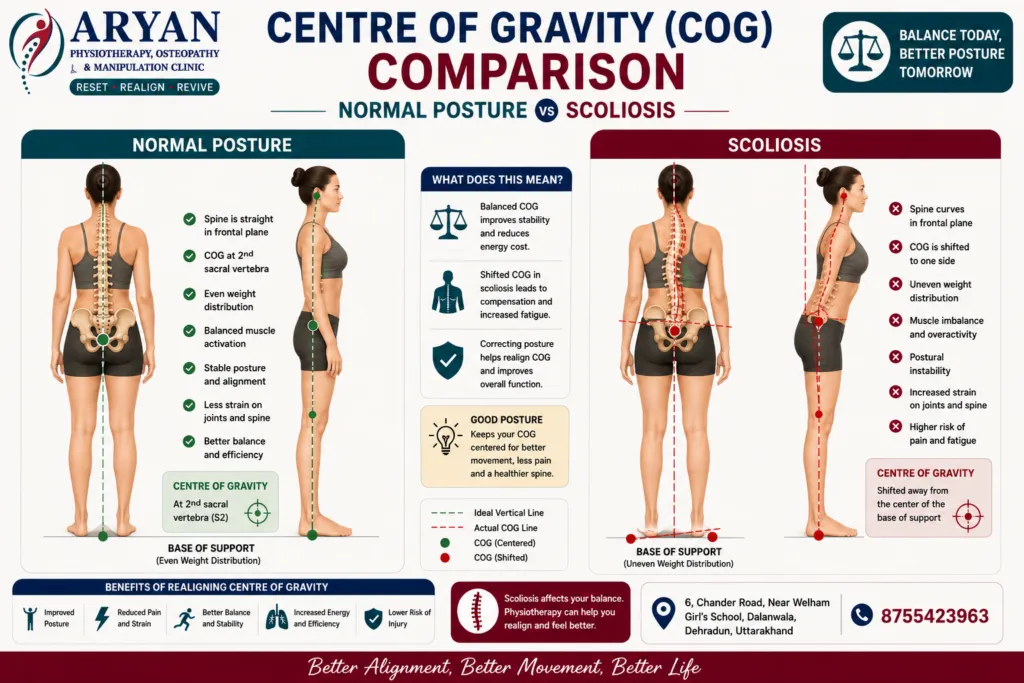
The human body constantly tries to keep the eyes level and maintain balance while standing and walking. When one region of the spine deviates, other spinal segments often develop compensatory curves to keep the body’s center of gravity over the feet.
Although these compensations help maintain balance, they also create abnormal mechanical stresses throughout the musculoskeletal system.
Common biomechanical consequences include:
- Uneven weight distribution across the vertebrae.
- Increased compressive forces on one side of the intervertebral discs.
- Excessive loading of facet joints.
- Muscle imbalance between the convex and concave sides of the curve.
- Altered movement patterns.
- Increased energy expenditure during standing and walking.
Over time, these changes may contribute to pain, fatigue, and progressive functional limitations.
Why Does Scoliosis Cause Pain?
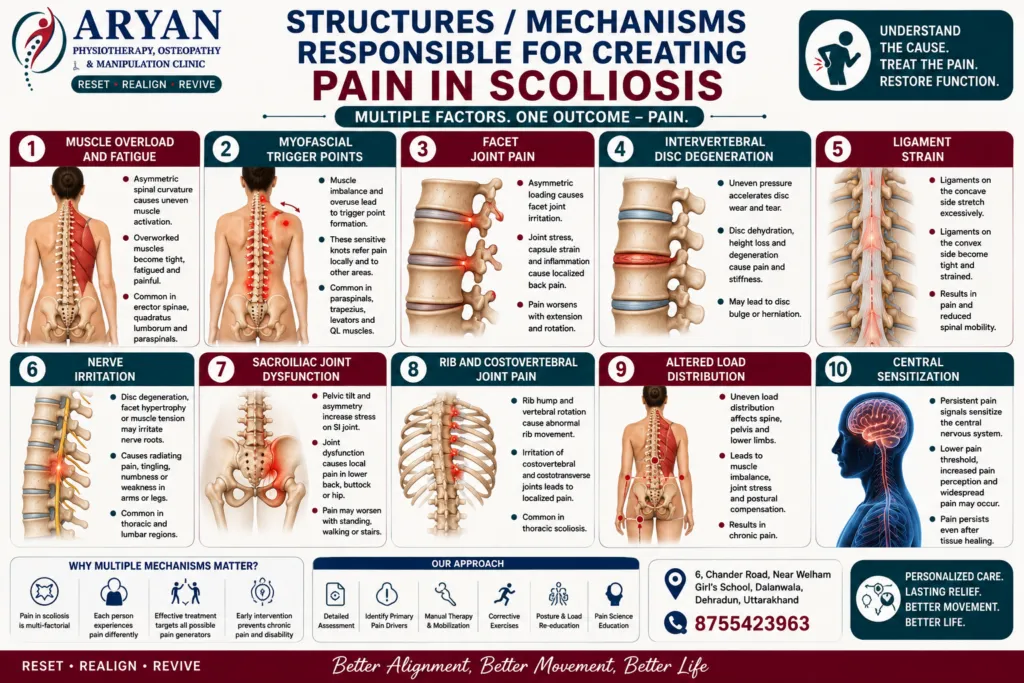
Although not every person with scoliosis experiences pain, several mechanisms have been identified that can contribute to discomfort:
- Muscle fatigue: Muscles on one side of the spine may work harder to maintain posture, leading to overuse and fatigue.
- Facet joint loading: Uneven joint loading can increase mechanical irritation.
- Intervertebral disc stress: Asymmetrical compression may accelerate degenerative changes in some individuals.
- Ligament tension: Supporting ligaments may be placed under uneven tension.
- Altered movement patterns: Compensatory movement strategies can increase stress on adjacent joints and soft tissues.
- Reduced muscular endurance: Decreased endurance may contribute to prolonged discomfort during standing, walking, or sitting.
Pain is often multifactorial and may be influenced by structural, muscular, neurological, and psychosocial factors. Therefore, a comprehensive assessment is essential before planning treatment.
Biomechanics of Scoliosis, Vertebral Rotation, Muscle Imbalance and Their Effects on the Entire Body
Primary Keywords: Scoliosis physiotherapy in Dehradun, scoliosis rehabilitation, spine specialist physiotherapist, posture correction Dehradun, scoliosis treatment without surgery
Secondary Keywords: Vertebral rotation, spinal biomechanics, muscle imbalance, scoliosis exercises, back pain physiotherapy, osteopathy in Dehradun
Why Understanding Biomechanics Is Important?
Many people believe scoliosis is simply a sideways bend in the spine. In reality, scoliosis changes the way the entire musculoskeletal system functions. Every vertebra, muscle, ligament, rib, joint and even breathing mechanics adapt to compensate for the spinal deviation.
These compensatory changes explain why patients often experience symptoms far away from the spinal curve itself. Someone with a thoracic scoliosis may complain primarily of neck pain, while another patient with lumbar scoliosis may experience hip pain or knee discomfort due to altered body mechanics.
Understanding these biomechanical changes is essential for designing an effective rehabilitation program rather than simply treating pain symptoms.
Scoliosis Is a Three-Dimensional Deformity
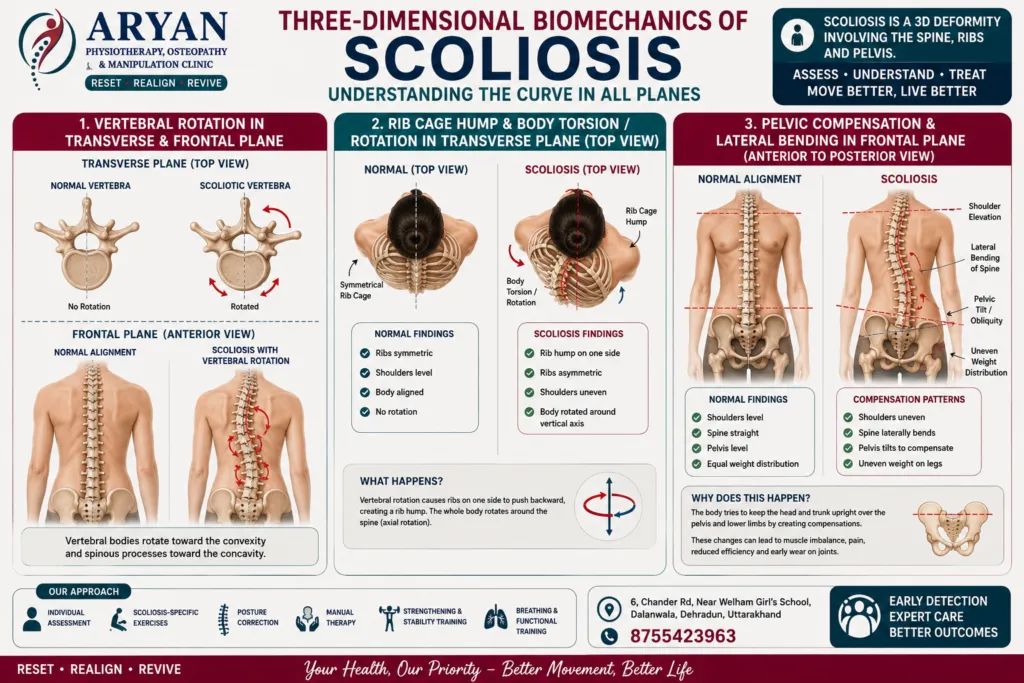
Modern spinal research describes scoliosis as involving movement in three anatomical planes simultaneously.
1. Frontal Plane
The spine curves sideways creating either:
- C-shaped curve
- S-shaped curve
This lateral deviation is measured using the Cobb angle.
2. Transverse Plane
Each vertebra gradually rotates around its own axis.
This vertebral rotation causes:
- Rib prominence
- Rib hump
- Chest wall asymmetry
- Uneven shoulder blade position
This rotational component is often more noticeable than the spinal curve itself.
3. Sagittal Plane
Normal spinal curves begin to change.
Examples include:
- Reduced thoracic kyphosis
- Increased lumbar lordosis
- Flattened thoracic spine
- Forward trunk inclination
These alterations influence load transmission throughout the body.
Vertebral Rotation: The Hidden Component of Scoliosis
One of the defining characteristics of structural scoliosis is vertebral rotation.
As the spine curves sideways, each vertebra also rotates.
This produces several visible changes:
- One shoulder blade becomes more prominent.
- One side of the rib cage protrudes.
- Waist asymmetry develops.
- Pelvis may appear uneven.
- Clothing may not fit symmetrically.
The rotation also changes how muscles attach to the vertebrae, influencing movement patterns and force generation.
Research suggests that vertebral rotation contributes significantly to cosmetic deformity and mechanical dysfunction.
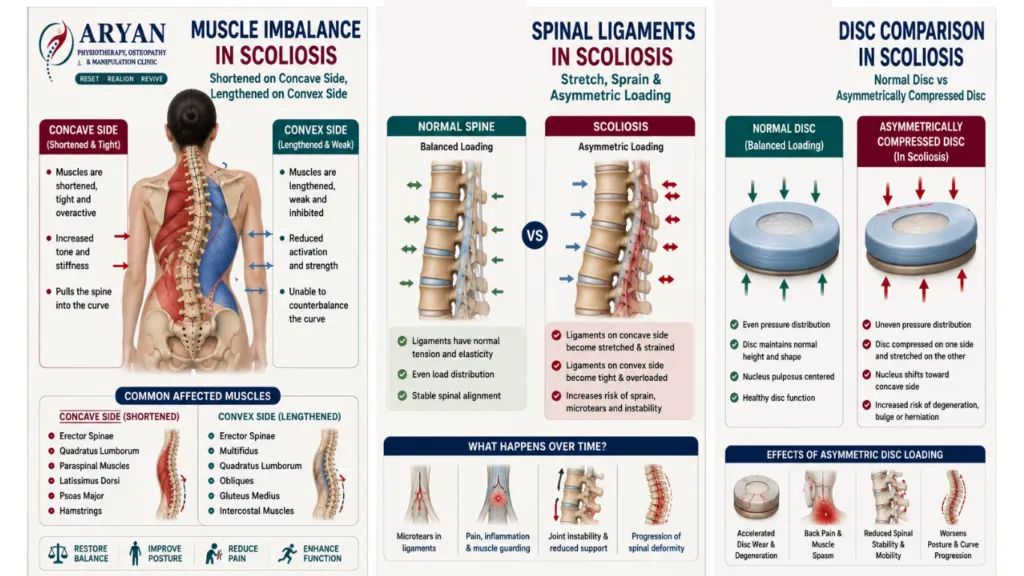
How Muscle Imbalance Develops?
Muscles rarely remain balanced around a curved spine.
Instead, different muscles undergo different adaptations.
Muscles on the Convex Side
These muscles often become:
- Lengthened
- Weak
- Fatigued
- Less efficient
Common examples include:
- Erector spinae
- Multifidus
- Latissimus dorsi
Muscles on the Concave Side
These muscles frequently become:
- Tight
- Shortened
- Overactive
- Less flexible
Over time, this imbalance perpetuates abnormal posture and movement.
Ligament Adaptations?
Ligaments normally stabilize spinal movement.
In scoliosis they gradually remodel according to prolonged loading.
The convex side may experience:
- Increased tensile stress
The concave side may develop:
- Compression
- Reduced mobility
These changes reduce spinal flexibility and contribute to stiffness.
What Happens to the Intervertebral Discs?
Intervertebral discs distribute compressive loads.
In scoliosis, loading becomes asymmetrical.
Instead of even pressure,
One side experiences:
- Higher compression
The opposite side experiences:
- Increased tension
Over years this may contribute to:
- Disc degeneration
- Disc bulging
- Reduced shock absorption
- Local inflammation
It is important to note that not every patient develops these changes, and imaging findings should always be interpreted alongside clinical symptoms.
How Facet Joints Become Painful?
Facet joints guide spinal motion.
During scoliosis:
- One facet joint becomes overloaded.
- The opposite joint experiences reduced loading.
Repeated abnormal loading may lead to:
- Joint irritation
- Cartilage wear
- Local inflammation
- Mechanical back pain
This is one reason adults with degenerative scoliosis often report localized back pain.
Changes in Rib Cage Mechanics
Thoracic scoliosis directly affects the rib cage.
As vertebrae rotate:
- Ribs rotate with them.
- Chest wall becomes asymmetrical.
- One side protrudes.
- Opposite side flattens.
These changes may reduce normal chest expansion.
In severe scoliosis, reduced thoracic mobility can contribute to decreased respiratory efficiency, particularly in larger curves.
Pelvic Compensation
The pelvis acts as the body’s foundation.
When the spine curves,
The pelvis often compensates by changing:
- Position
- Rotation
- Tilt
This compensation attempts to keep the body’s centre of gravity balanced.
Patients may notice:
- Uneven hips
- Apparently shorter leg
- Weight shifted onto one side
- Difficulty standing evenly
How Scoliosis Changes Walking (Gait)?
Walking requires precise coordination between:
- Spine
- Pelvis
- Hips
- Knees
- Ankles
Scoliosis alters this coordination.
Researchers have observed:
- Reduced trunk rotation
- Altered pelvic movement
- Shorter stride length
- Reduced walking efficiency
- Increased energy expenditure
Some patients compensate so effectively that gait appears normal despite significant spinal deformity.
Effect on Balance?
Maintaining upright posture requires continuous communication between:
- Eyes
- Inner ear
- Muscles
- Joints
- Nervous system
Spinal deformity changes the body’s centre of mass.
Consequently, balance strategies become more demanding.
Patients may experience:
- Fatigue after prolonged standing
- Difficulty standing on one leg
- Feeling “crooked”
- Uneven weight bearing
Why Fatigue Develops?
One of the most common complaints is:
“I feel tired even after standing for a short time.”
This happens because muscles continuously work to prevent the body from collapsing toward the curve.
Unlike healthy posture, where muscles share the workload evenly, scoliosis causes certain muscles to remain active for prolonged periods.
This increases:
- Muscle fatigue
- Oxygen demand
- Metabolic stress
Eventually leading to aching pain.
Why Every Patient Experiences Different Symptoms?
Two patients with identical Cobb angles may have completely different symptoms.
Pain depends on many interacting factors, including:
- Curve location
- Vertebral rotation
- Muscle endurance
- Disc health
- Joint loading
- Activity level
- Sleep quality
- Psychological factors
- Physical conditioning
For this reason, treatment should be individualized rather than based solely on X-ray findings.
Clinical Importance of Comprehensive Assessment
At Aryan Physiotherapy, Osteopathy & Manipulation Clinic, Dalanwala, Dehradun, evaluation of scoliosis extends beyond measuring the spinal curve.
A comprehensive assessment may include:
- Detailed posture analysis
- Spinal mobility assessment
- Muscle strength and endurance testing
- Flexibility evaluation
- Functional movement assessment
- Balance assessment
- Breathing pattern evaluation
- Gait analysis
- Pain behaviour assessment
- Review of imaging findings where appropriate
This helps identify the factors contributing to symptoms and supports the development of a personalized rehabilitation plan.
Pain Mechanisms in Scoliosis: Why Does Scoliosis Cause Pain? Modern Scientific Understanding and Physiotherapy Management
Primary Keywords: Scoliosis pain treatment Dehradun, scoliosis physiotherapy, scoliosis pain relief, spine pain physiotherapy, scoliosis rehabilitation
Secondary Keywords: Chronic back pain, neck pain, muscle imbalance, scoliosis exercises, scoliosis specialist, posture correction Dehradun
One of the most common questions patients ask is:
“Does scoliosis always cause pain?”
The answer is No.
Many adolescents with scoliosis have little or no pain despite having significant spinal curves, whereas some adults with relatively small curves may experience severe discomfort.
Modern research has shown that pain in scoliosis is multifactorial. The spinal curve itself is only one contributor. Pain arises from the interaction of muscles, joints, ligaments, intervertebral discs, nerves, biomechanics, inflammation, central nervous system processing, and psychosocial factors.
Understanding these mechanisms is essential because effective treatment should target the actual pain generators rather than focusing only on X-ray findings.
Is the Curve Itself Painful?
Interestingly, the spinal curve itself contains no pain receptors.Instead, pain develops from structures surrounding the curve.Potential pain generators include:
- Muscles
- Ligaments
- Facet joints
- Intervertebral discs
- Nerve roots
- Fascia
- Sacroiliac joints
- Costovertebral joints
- Rib cage
- Overloaded adjacent joints
This explains why two patients with identical Cobb angles may report completely different symptoms.
Psychological Influences on Pain
Pain is influenced not only by tissues but also by the brain.
Research has identified several factors associated with increased pain intensity:
- Fear of movement
- Anxiety
- Depression
- Poor sleep
- Stress
- Catastrophizing
- Reduced physical activity
Addressing these factors through education and graded rehabilitation can improve outcomes.
Why Imaging Alone Cannot Explain Pain?
Many patients assume that a larger Cobb angle always means greater pain.
Research shows this is not always true.
Some patients with severe curves experience minimal pain, while others with mild curves report substantial symptoms.
Pain severity depends on multiple interacting factors, including:
- Muscle conditioning
- Joint health
- Nerve involvement
- Sleep quality
- Activity level
- Pain processing
- Psychological well-being
Therefore, treatment decisions should never rely solely on X-rays.
Evidence-Based Physiotherapy Management
Current international rehabilitation guidelines recommend individualized conservative management for many patients with scoliosis.
A physiotherapy program may include:
Comprehensive Assessment
- Posture evaluation
- Functional movement analysis
- Muscle testing
- Balance assessment
- Breathing assessment
- Gait analysis
Manual Therapy
May help improve:
- Joint mobility
- Soft tissue flexibility
- Pain modulation
Manual therapy is generally used alongside active rehabilitation rather than as a standalone treatment.
Therapeutic Exercise
Exercises may target:
- Core stability
- Trunk endurance
- Spinal mobility
- Balance
- Flexibility
- Functional movement retraining
Where appropriate, scoliosis-specific exercise approaches such as the Schroth method may be considered as part of an individualized program.
Patient Education
Understanding pain mechanisms helps reduce fear and improves confidence in movement.
Education may include:
- Safe activity modification
- Ergonomics
- Home exercise guidance
- Postural awareness
- Self-management strategies
Long-Term Follow-Up
Because scoliosis changes over time,
Periodic reassessment helps monitor:
- Symptoms
- Function
- Posture
- Exercise progression
Clinical Approach at Aryan Physiotherapy, Osteopathy & Manipulation Clinic
At Aryan Physiotherapy, Osteopathy & Manipulation Clinic, Dalanwala, Dehradun, scoliosis management focuses on identifying the specific contributors to each patient’s symptoms rather than treating only the spinal curve.
Assessment may include posture analysis, movement assessment, muscle performance, flexibility, breathing mechanics, balance, gait and functional limitations. Individualized rehabilitation plans may combine education, manual therapy, therapeutic exercise, posture correction and progressive functional training based on the patient’s clinical presentation.
Patient Recovery Story: Ms. Vandana’s Journey from Severe Spine Pain to Improved Mobility
Living with persistent spine pain can affect every aspect of daily life—from walking and standing to sleeping comfortably and performing routine activities. This was the experience of Ms. Vandana, who visited Aryan Physiotherapy, Osteopathy & Manipulation Clinic, Dalanwala, Dehradun, seeking help for severe pain involving her entire spine.
When Ms. Vandana first arrived at our clinic, she presented with a noticeably stooped posture and reported her pain intensity as 9 out of 10. The severity of her symptoms had significantly reduced her ability to perform everyday activities comfortably. Rather than focusing only on relieving pain, our priority was to understand why she was experiencing these symptoms.
A comprehensive physiotherapy assessment was performed, including posture analysis, spinal movement assessment, muscle balance evaluation, functional movement testing, and a review of her clinical findings. The assessment suggested that abnormal spinal alignment, muscle imbalance, reduced mobility, and altered movement patterns were contributing to her symptoms. These changes are commonly seen in individuals with scoliosis or other spinal alignment disorders, where the body’s mechanics become altered over time.
Based on the findings, we designed an individualized rehabilitation program tailored to Ms. Vandana’s specific needs. Her treatment plan incorporated evidence-informed physiotherapy approaches, including manual therapy, osteopathic techniques, therapeutic exercises, posture correction, movement retraining, and a structured home exercise program. Throughout her rehabilitation, emphasis was placed on restoring movement quality, improving muscle control, enhancing spinal mobility, and helping her regain confidence in daily activities.
Over the course of her rehabilitation, Ms. Vandana reported progressive improvements in her symptoms and functional abilities. She experienced reduced pain, improved posture, better mobility, and greater ease in performing routine activities. Her recovery highlights the importance of early assessment, personalized treatment, and active participation in rehabilitation rather than relying solely on pain medications or prolonged rest.
Every patient’s condition is unique, and recovery varies depending on the cause, severity, overall health, and adherence to treatment. However, Ms. Vandana’s journey demonstrates how a comprehensive assessment and individualized physiotherapy program can play an important role in managing spine-related pain and improving quality of life.
If you are experiencing back pain, neck pain, scoliosis, spinal stiffness, posture-related problems, or difficulty with daily movements, seeking an early assessment from a qualified physiotherapist can help identify contributing factors and guide an appropriate rehabilitation plan.
Aryan Physiotherapy, Osteopathy & Manipulation Clinic in Dalanwala, Dehradun provides evidence-based physiotherapy, osteopathy, manual therapy, posture correction, and personalized rehabilitation programs for a wide range of musculoskeletal and neurological conditions. Our goal is to help every patient move better, function better, and achieve the best possible recovery through individualized care.
Disclaimer: This is an individual patient experience. Treatment outcomes vary between individuals depending on their condition, medical history, and response to rehabilitation. No specific outcome can be guaranteed.
Frequently Asked Questions (FAQs)
1. What is scoliosis, and how does it affect the spine?
Scoliosis is a three-dimensional spinal deformity in which the spine curves sideways and the vertebrae rotate. It can affect posture, balance, muscle function, breathing mechanics, and movement. Early assessment by an experienced physiotherapist can help identify contributing factors and guide appropriate treatment.
2. What are the common symptoms of scoliosis?
Common symptoms include uneven shoulders, one hip appearing higher than the other, back pain, neck pain, muscle stiffness, rib prominence, poor posture, fatigue, and difficulty standing or walking for long periods. Symptoms vary depending on the severity and type of scoliosis.
3. Does scoliosis always cause pain?
No. Many people with scoliosis have little or no pain, while others experience significant discomfort. Pain often results from muscle imbalance, joint loading, ligament strain, disc changes, or altered movement patterns rather than the spinal curve itself.
4. Can physiotherapy help scoliosis?
Yes. Evidence-informed physiotherapy may help improve posture, spinal mobility, muscle strength, balance, flexibility, and functional movement. Although physiotherapy does not permanently straighten every structural curve, it can play an important role in managing symptoms and improving quality of life.
5. What is the best treatment for scoliosis in Dehradun?
The most appropriate treatment depends on the patient’s age, symptoms, curve characteristics, and functional limitations. At Aryan Physiotherapy, Osteopathy & Manipulation Clinic, Dalanwala, Dehradun, treatment plans are individualized after a comprehensive clinical assessment.
6. Can adults develop scoliosis?
Yes. Adult scoliosis may result from untreated adolescent scoliosis or develop later due to age-related degeneration of the spine, intervertebral discs, and joints. Early diagnosis can help manage symptoms more effectively.
7. Can scoliosis cause neck pain and headaches?
Yes. Changes in spinal alignment and muscle imbalance may increase stress on the cervical spine and surrounding muscles, contributing to neck pain, headaches, and reduced neck mobility in some individuals.
8. Why does scoliosis affect posture?
The body naturally tries to maintain balance despite spinal curvature. This leads to compensatory changes in the shoulders, pelvis, hips, and muscles, which may result in a stooped posture, uneven shoulders, or trunk imbalance.
9. Can scoliosis become worse over time?
Some spinal curves remain stable, while others may progress depending on age, growth, curve magnitude, and degenerative changes. Regular monitoring helps identify progression and guide timely intervention.
10. When should I see a physiotherapist for scoliosis?
You should seek an assessment if you notice uneven shoulders, persistent back pain, poor posture, spinal asymmetry, reduced mobility, or difficulty performing daily activities. Early evaluation allows timely management and individualized rehabilitation.
11. Can scoliosis affect breathing?
In moderate to severe thoracic scoliosis, rib cage changes may reduce chest wall expansion and breathing efficiency. Mild scoliosis generally has little effect on lung function.
12. Can scoliosis cause leg pain or sciatica?
In some adults, scoliosis may contribute to nerve irritation, altered biomechanics, or degenerative spinal changes that can cause radiating leg pain, numbness, or symptoms similar to sciatica. A detailed assessment is required to determine the exact cause.
13. Is surgery necessary for every scoliosis patient?
No. Many people with scoliosis are managed successfully using observation, physiotherapy, exercise-based rehabilitation, or bracing where appropriate. Surgical treatment is generally considered only in selected cases after specialist evaluation.
14. What happens during a scoliosis assessment?
A comprehensive assessment may include posture analysis, spinal mobility testing, muscle strength evaluation, flexibility assessment, gait analysis, functional movement testing, neurological examination, and review of imaging where appropriate.
15. How long does scoliosis rehabilitation take?
The duration varies depending on the severity of the condition, symptoms, age, treatment goals, and adherence to rehabilitation. Recovery timelines differ for every individual, making personalized treatment essential.
16. What exercises are recommended for scoliosis?
Exercise programs should be individualized after assessment and may include spinal stabilization, core strengthening, posture correction, flexibility training, breathing exercises, balance training, and functional movement retraining under professional supervision.
17. Can poor posture cause scoliosis?
Poor posture alone does not usually cause structural scoliosis. However, prolonged poor posture can contribute to muscular imbalance, discomfort, and functional spinal deviations that may resemble scoliosis. Proper assessment helps differentiate these conditions.
18. How is scoliosis diagnosed?
Diagnosis involves a clinical examination, posture assessment, Adam’s Forward Bend Test, and imaging such as standing spinal X-rays when indicated. The Cobb angle is commonly used to measure the degree of spinal curvature.
19. Why choose Aryan Physiotherapy, Osteopathy & Manipulation Clinic for scoliosis treatment in Dehradun?
Our clinic provides individualized assessment and evidence-informed rehabilitation for scoliosis, spine pain, posture-related disorders, and musculoskeletal conditions. Treatment plans are tailored to each patient’s symptoms, functional limitations, and rehabilitation goals using physiotherapy, osteopathy, manual therapy, and therapeutic exercise.
20. Where can I get an assessment for scoliosis and spine pain in Dehradun?
If you are experiencing scoliosis, persistent back pain, neck pain, poor posture, or movement difficulties, you can book a comprehensive assessment at Aryan Physiotherapy, Osteopathy & Manipulation Clinic, 6, Chander Road, Near Welham Girl’s School, Dalanwala, Dehradun. Our team provides personalized, evidence-informed rehabilitation to help improve movement, function, and quality of life.