Pregnancy is a remarkable period of physical and emotional change. As the baby grows, a woman’s posture, centre of gravity, mobility, muscle loading, balance and daily movement patterns can change significantly. These changes may contribute to back pain, pelvic discomfort, stiffness, reduced physical activity, weakness or difficulty performing everyday activities.
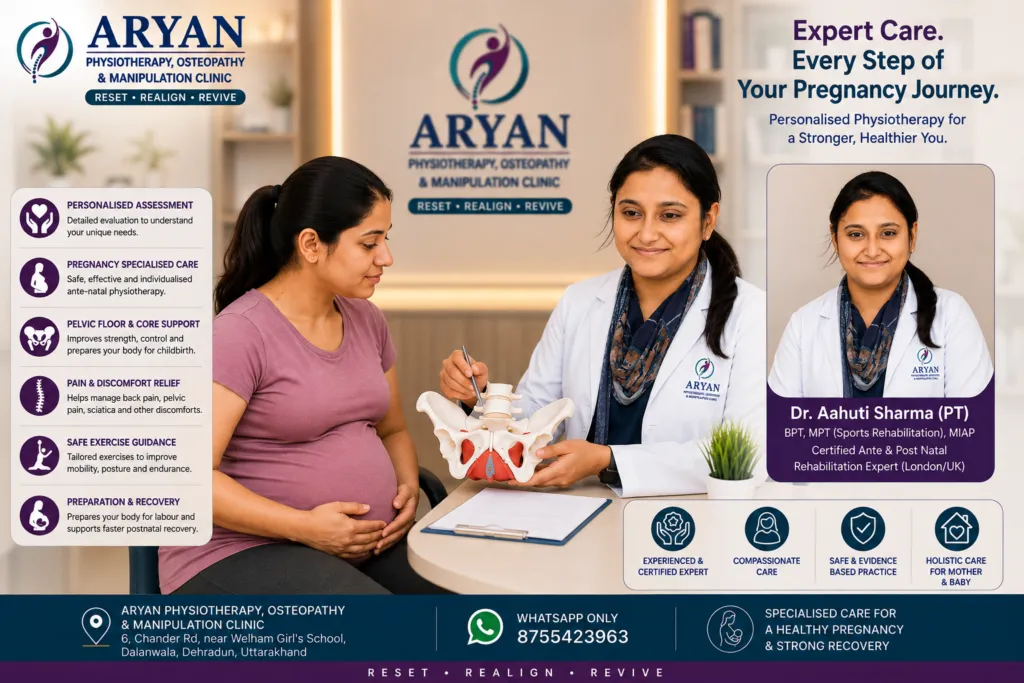
Ante-natal physiotherapy is a specialised approach to physiotherapy during pregnancy that focuses on helping women move comfortably, remain appropriately active, manage pregnancy-related musculoskeletal problems and prepare their bodies for the physical demands of pregnancy, childbirth and early recovery.
At Aryan Physiotherapy, Osteopathy & Manipulation Clinic in Dalanwala, Dehradun, ante-natal rehabilitation is provided by Dr. Aahuti Sharma (PT), Certified Ante & Post Natal Rehabilitation Expert (London/UK), with treatment tailored to each woman’s stage of pregnancy, symptoms, functional needs and medical considerations.
What Is Ante-Natal Physiotherapy?
Ante-natal physiotherapy, also called prenatal or pregnancy physiotherapy, involves assessment, education, movement guidance and individualised rehabilitation during pregnancy.
The aim is not simply to treat pain. A physiotherapist can assess how pregnancy-related changes are affecting movement, posture, strength, mobility and daily function and then develop an appropriate rehabilitation programme.
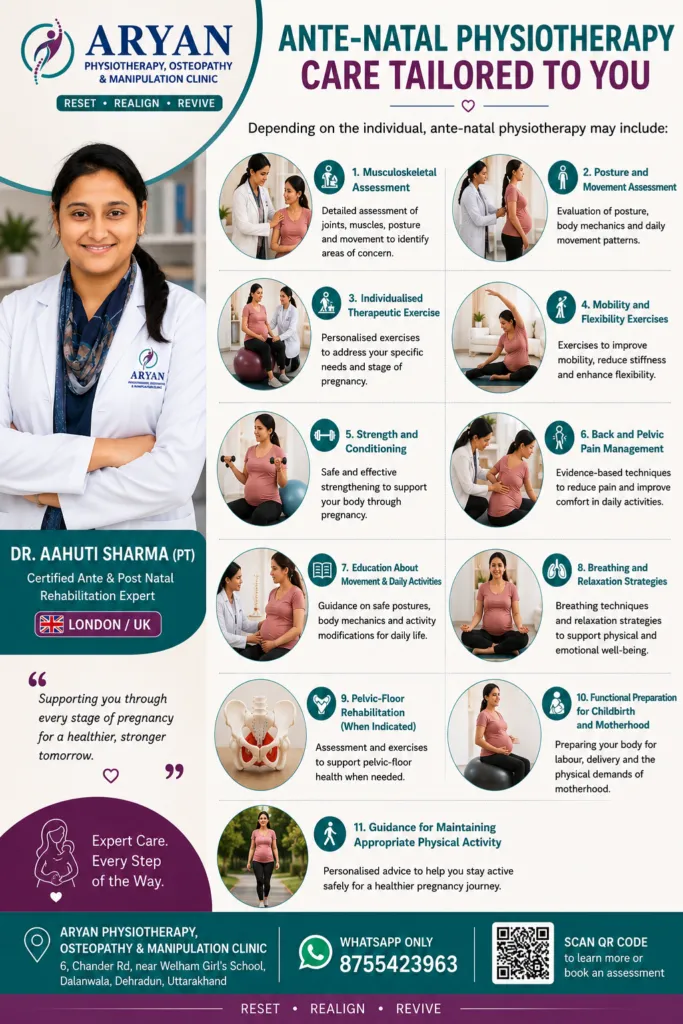
Depending on the individual, ante-natal physiotherapy may include:
- Musculoskeletal assessment
- Posture and movement assessment
- Individualised therapeutic exercise
- Mobility and flexibility exercises
- Strength and conditioning
- Back and pelvic pain management
- Education about movement and daily activities
- Breathing and relaxation strategies
- Pelvic-floor rehabilitation when indicated
- Functional preparation for childbirth and motherhood
- Guidance for maintaining appropriate physical activity
Every pregnancy is different. Therefore, an exercise or rehabilitation programme should not simply be copied from another person or followed from a generic online video.
Why Does Pregnancy Cause So Many Physical Changes?
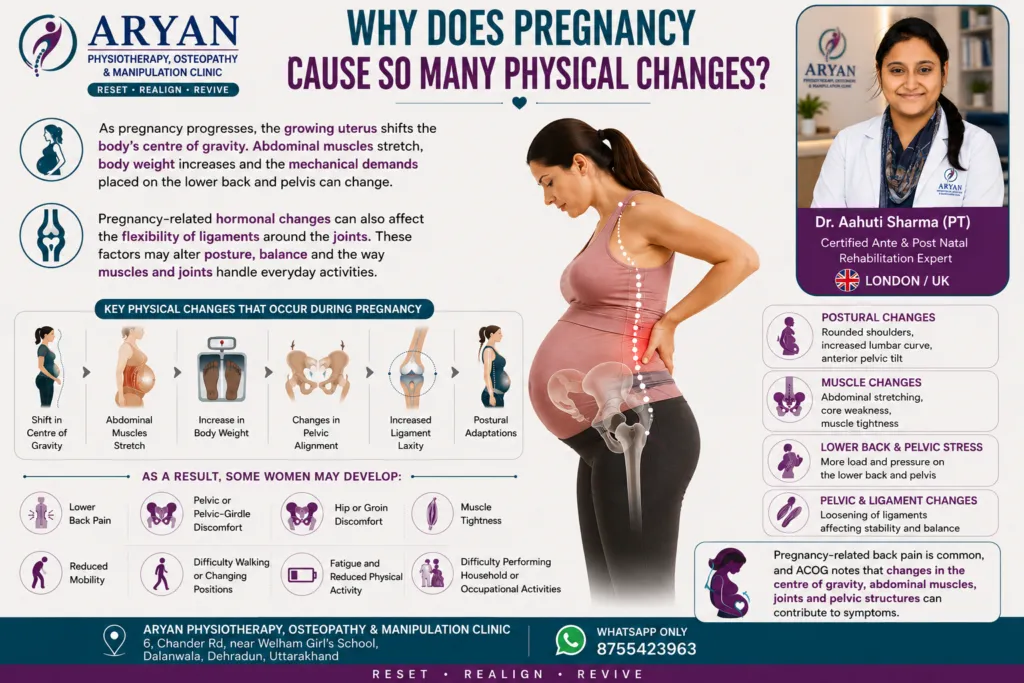
As pregnancy progresses, the growing uterus shifts the body’s centre of gravity. Abdominal muscles stretch, body weight increases and the mechanical demands placed on the lower back and pelvis can change.
Pregnancy-related hormonal changes can also affect the flexibility of ligaments around the joints. These factors may alter posture, balance and the way muscles and joints handle everyday activities.
As a result, some women may develop:
- Lower back pain
- Pelvic or pelvic-girdle discomfort
- Hip or groin discomfort
- Postural changes
- Muscle tightness
- Reduced mobility
- Difficulty walking or changing positions
- Fatigue and reduced physical activity
- Difficulty performing household or occupational activities
Pregnancy-related back pain is common, and ACOG notes that changes in the centre of gravity, abdominal muscles, joints and pelvic structures can contribute to symptoms.
How Can Physiotherapy Help During Pregnancy?
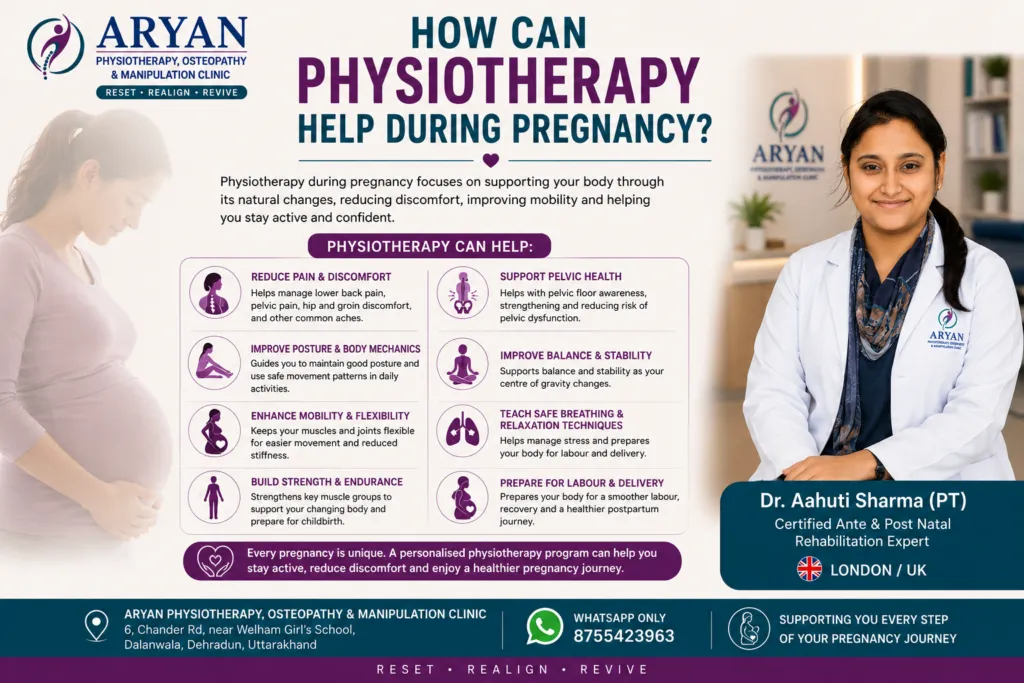
1. Managing Back and Pelvic Pain
Back and pelvic discomfort can interfere with walking, sleeping, sitting, working and other daily activities.
After appropriate assessment and medical considerations have been taken into account, physiotherapy may help through individually selected exercises, movement strategies, posture education and functional modifications.
2. Maintaining Appropriate Strength
Pregnancy does not mean that all physical activity needs to stop.
For women without contraindications, regular physical activity during pregnancy can provide important health benefits. ACOG and WHO recommend regular physical activity for most pregnant women without contraindications, with activity appropriately adapted to the individual’s circumstances.
Physiotherapy can help determine how exercises may need to be modified as pregnancy progresses.
3. Improving Mobility
Stiffness or discomfort can make ordinary movements more difficult.
A physiotherapist can assess functional mobility and prescribe appropriate exercises to help maintain comfortable movement while considering the changes occurring during pregnancy.
4. Supporting Posture and Movement
As the abdomen grows, sitting, standing, walking, sleeping and lifting patterns may change.
Instead of simply telling a woman to “correct her posture,” physiotherapy can focus on practical movement strategies that fit her body, symptoms, work demands and stage of pregnancy.
5. Supporting Pelvic-Floor Function
The pelvic floor plays an important role in bladder and bowel control, pelvic support and overall pelvic function.
Pelvic-floor assessment and exercise may be appropriate during pregnancy for some women, particularly when symptoms or risk factors indicate a need for targeted rehabilitation.
Importantly, pelvic-floor rehabilitation should be individualised rather than assuming that every woman needs the same exercises.
6. Preparing for the Physical Demands of Motherhood
Pregnancy preparation should not focus only on childbirth.
A new mother will also need to repeatedly lift, carry, feed, bend, walk, stand and care for her baby.
Physiotherapy can therefore include functional education and preparation for these physical demands.
Is Exercise Safe During Pregnancy?
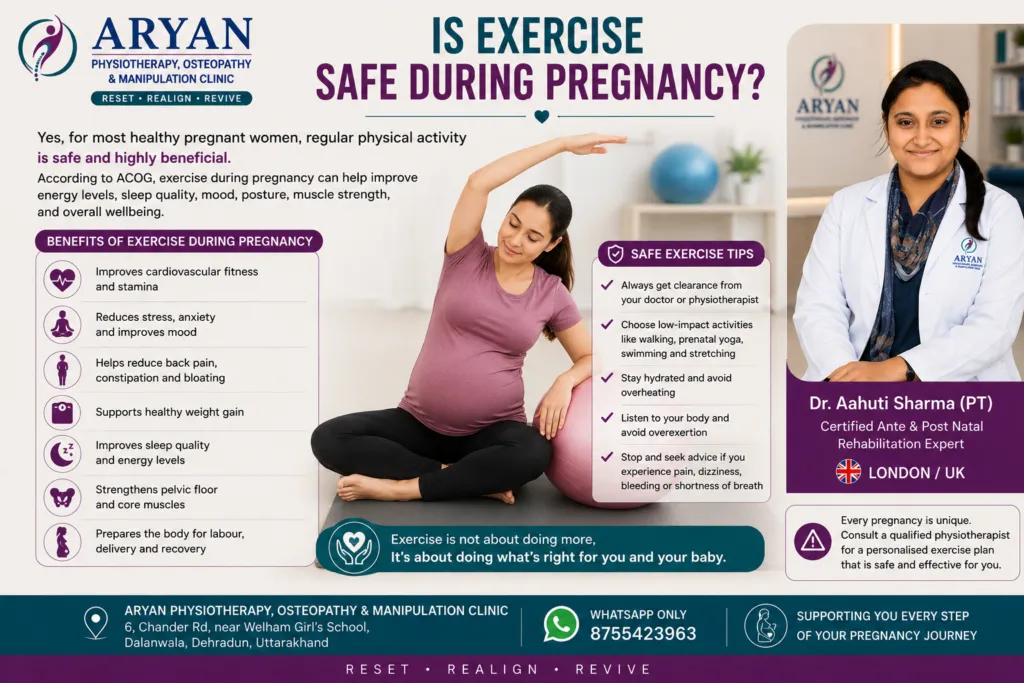
For most women with an uncomplicated pregnancy, appropriately selected physical activity is beneficial.
ACOG states that healthy women with normal pregnancies can generally continue or begin regular physical activity, while recommending discussion with the obstetrician-gynaecologist regarding appropriate activity. WHO also recommends regular physical activity during pregnancy for women without contraindications.
However, “exercise during pregnancy” does not mean that every exercise is suitable for every woman.
The appropriate exercise programme depends on factors such as:
- Stage of pregnancy
- Previous activity level
- Current symptoms
- Musculoskeletal condition
- Medical history
- Pregnancy-related complications
- Fitness level
- Functional requirements
- Advice from the treating obstetrician/gynaecologist
If you have been advised to restrict activity or have a high-risk pregnancy or medical/obstetric complication, discuss exercise and rehabilitation with your treating healthcare professional before beginning or changing an exercise programme.
When Should a Pregnant Woman Consider Physiotherapy?
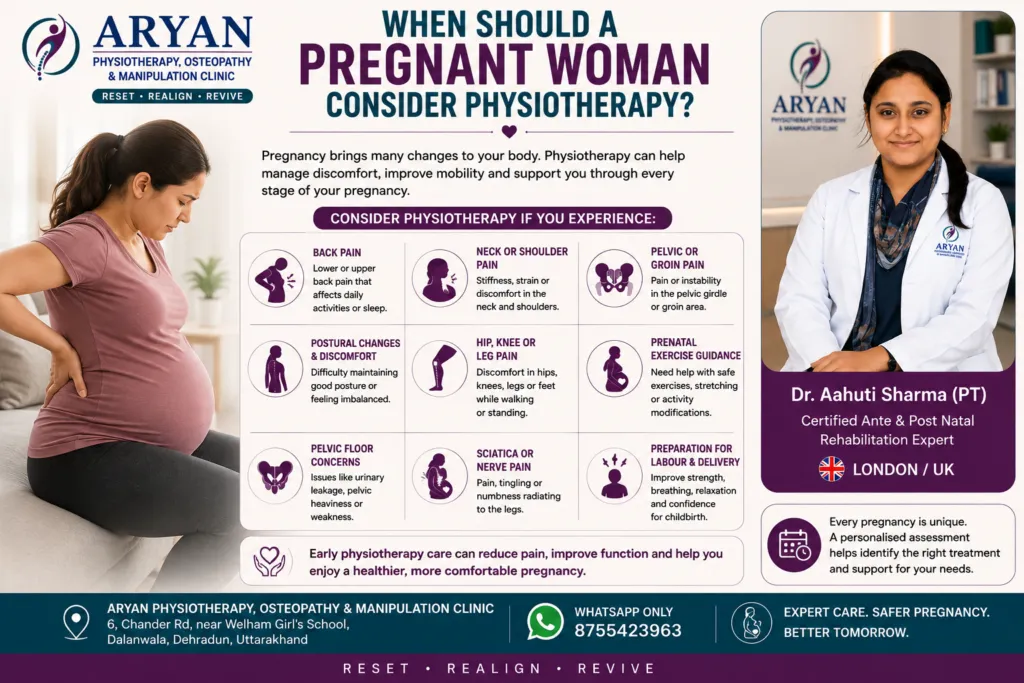
You do not necessarily need to wait until pain becomes severe.
An ante-natal physiotherapy assessment may be useful if you experience:
- Persistent back pain
- Pelvic or pelvic-girdle pain
- Hip or groin discomfort
- Difficulty walking or changing positions
- Increasing stiffness
- Difficulty sleeping because of musculoskeletal discomfort
- Reduced ability to perform daily activities
- Weakness or deconditioning
- Difficulty maintaining appropriate physical activity
- Pelvic-floor symptoms
- Concerns about movement or exercise during pregnancy
Early assessment can help identify modifiable movement and functional factors before symptoms become more limiting.
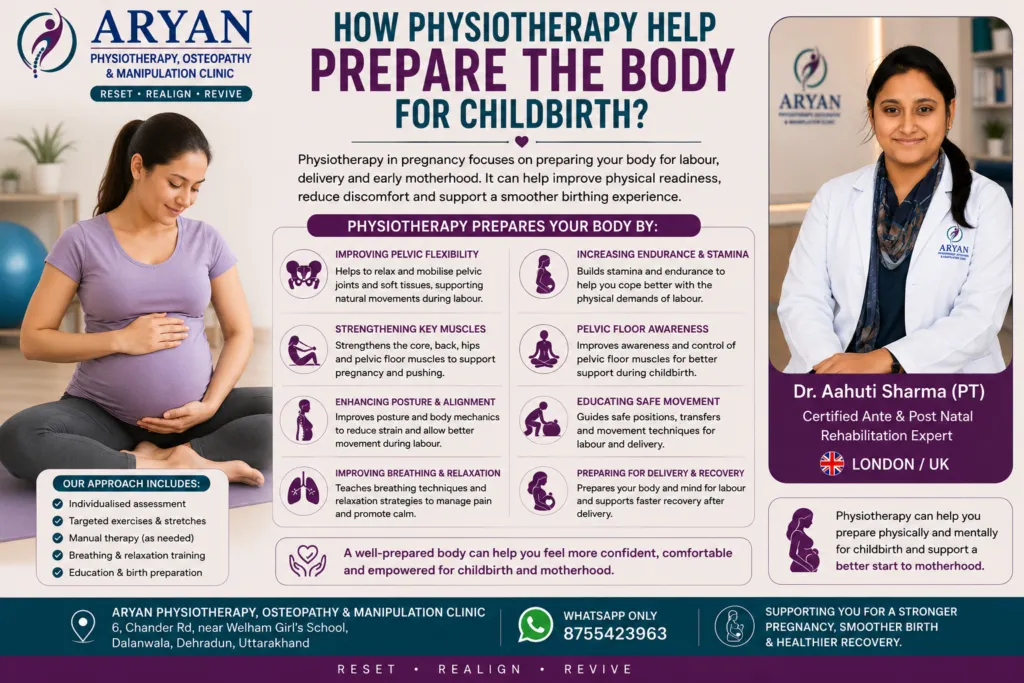
Can Physiotherapy Help Prepare the Body for Childbirth?
Physiotherapy cannot guarantee a particular mode of delivery or eliminate all childbirth-related difficulties.
However, appropriate rehabilitation during pregnancy can help women maintain strength, mobility, physical confidence and functional capacity.
Depending on the individual’s needs, rehabilitation may include:
- Mobility exercises
- Strengthening
- Breathing strategies
- Pelvic-floor awareness and training
- Positioning and movement education
- Functional conditioning
- Relaxation strategies
- Education for daily activities
The programme should always be adapted to the woman’s pregnancy and medical circumstances.
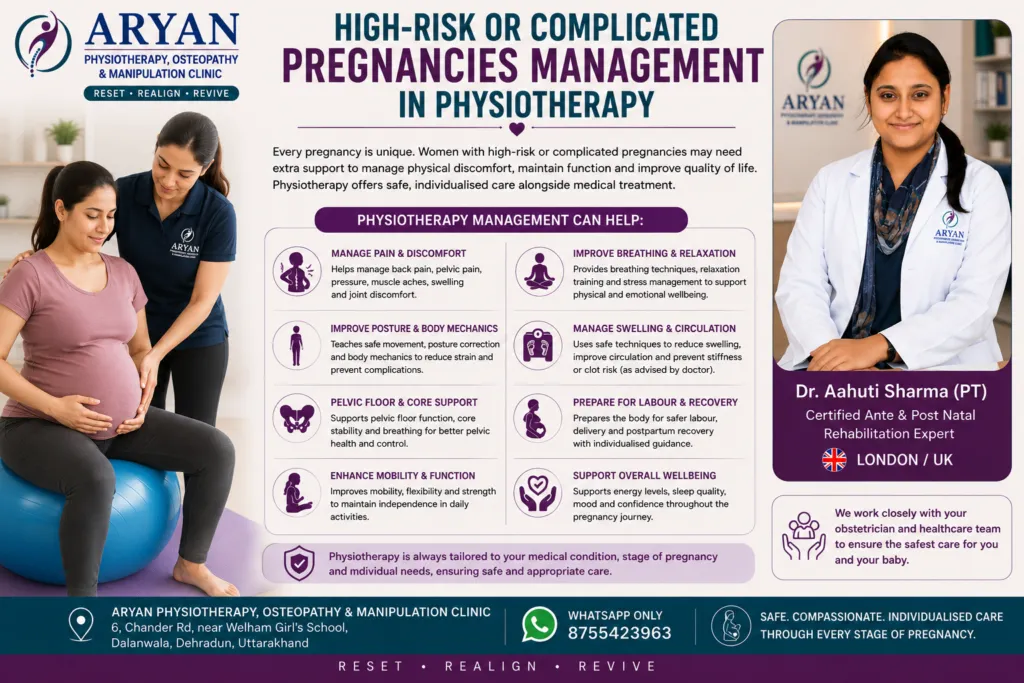
What About High-Risk or Complicated Pregnancies?
This is particularly important.
Physiotherapy can form part of multidisciplinary care, but it should not replace obstetric management.
Women with conditions or complications that affect pregnancy or exercise suitability should first receive appropriate medical guidance. Rehabilitation can then be planned according to the individual’s clinical status and, where appropriate, in coordination with the treating gynaecologist or obstetrician.
At Aryan Physiotherapy, the objective is to work alongside medical care, not instead of it.
This collaborative approach is especially important when symptoms are unusual, severe, persistent or associated with a known pregnancy complication.
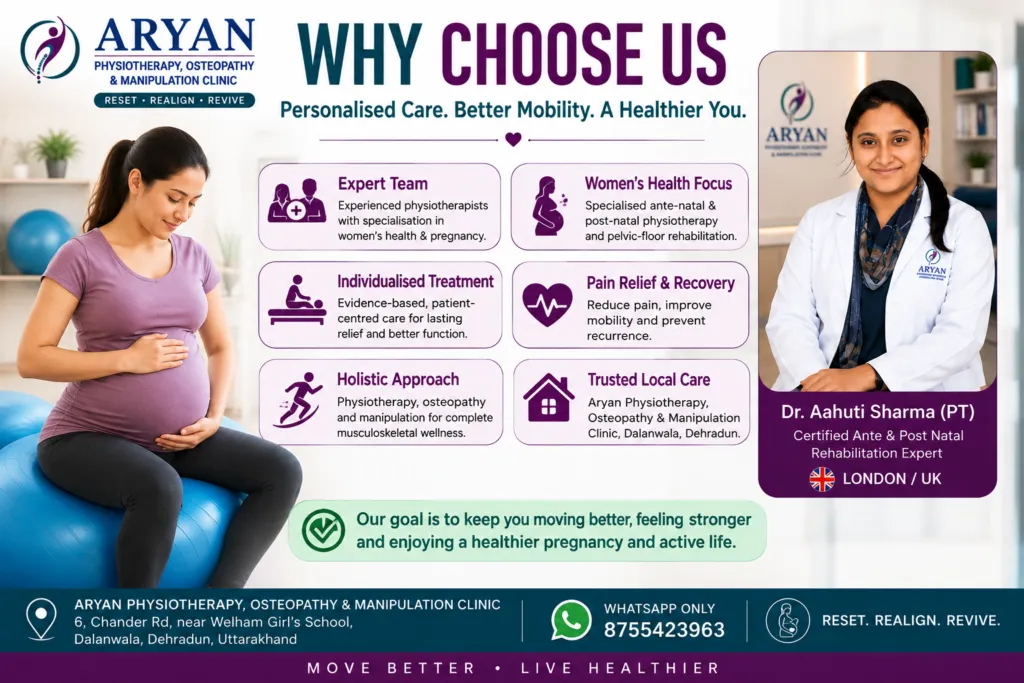
Why Choose Dr. Aahuti Sharma for Ante-Natal Rehabilitation in Dehradun?
Dr. Aahuti Sharma (PT) is a Certified Ante & Post Natal Rehabilitation Expert (London/UK) at Aryan Physiotherapy, Osteopathy & Manipulation Clinic.
Her role is focused on providing personalised physiotherapy and rehabilitation for women during pregnancy and after childbirth.
Rather than prescribing a standard programme for every mother, assessment considers:
Pregnancy stage → Symptoms → Movement → Strength → Function → Individual goals → Medical considerations
This allows rehabilitation to be adapted as pregnancy progresses.
Ante-Natal Physiotherapy in Dalanwala, Dehradun
If you are looking for ante-natal physiotherapy in Dehradun, pregnancy physiotherapy near Dalanwala, or a physiotherapist for pregnancy-related back and pelvic pain, professional assessment can help determine whether physiotherapy is appropriate for your situation.
At Aryan Physiotherapy, Osteopathy & Manipulation Clinic, rehabilitation is designed around the individual woman rather than a one-size-fits-all programme.
Our approach
Assess → Educate → Individualise → Rehabilitate → Progress
The goal is to help mothers stay appropriately active, manage physical discomfort, maintain functional capacity and prepare for the physical demands of childbirth and motherhood.
Frequently Asked Questions
Is physiotherapy safe during pregnancy?
For most women with uncomplicated pregnancies, appropriately selected physiotherapy and physical activity can be safe and beneficial. The programme should be individualised, and women should discuss exercise and rehabilitation with their obstetrician or gynaecologist, particularly when medical or obstetric concerns are present.
When should I start ante-natal physiotherapy?
There is no single week of pregnancy at which every woman should begin physiotherapy. An assessment may be useful whenever symptoms, functional difficulties, exercise concerns or specific rehabilitation needs arise.
Can physiotherapy help pregnancy-related back pain?
Yes. After appropriate assessment, physiotherapy may help manage pregnancy-related back pain through individually selected exercises, movement strategies, posture education and activity modification.
Can I exercise during pregnancy?
For most women without contraindications, regular physical activity is encouraged during pregnancy. However, the type, intensity and progression of exercise should be appropriate for the individual and her pregnancy.
Can physiotherapy help pelvic pain during pregnancy?
Physiotherapy may help women experiencing pregnancy-related pelvic or pelvic-girdle pain after appropriate assessment. Treatment can include education, movement modification, mobility and strengthening strategies tailored to the individual.
Do I need my gynaecologist’s permission before physiotherapy?
If you have a normal, uncomplicated pregnancy, you can discuss physiotherapy and exercise with your healthcare provider. If you have a medical or obstetric complication, activity restriction or other concern, medical guidance should be obtained before starting or changing an exercise programme.
Is ante-natal physiotherapy only for women with pain?
No. Physiotherapy can also focus on maintaining appropriate strength, mobility, physical activity and function during pregnancy and preparing for the physical demands of motherhood.
Can physiotherapy prepare me for childbirth?
Physiotherapy cannot guarantee a particular delivery outcome. However, appropriately prescribed rehabilitation can support mobility, strength, pelvic-floor awareness, breathing and functional capacity during pregnancy.
Can I receive physiotherapy after a complicated pregnancy?
Possibly, depending on your medical condition and rehabilitation needs. Complicated pregnancies require individualised care and coordination with the treating medical team where appropriate.
Where can I get ante-natal physiotherapy in Dehradun?
Ante-natal physiotherapy is available at Aryan Physiotherapy, Osteopathy & Manipulation Clinic, 6, Chander Rd, near Welham Girl’s School, Dalanwala, Dehradun, with Dr. Aahuti Sharma (PT), Certified Ante & Post Natal Rehabilitation Expert (London/UK).
When Should You Seek Medical Advice Urgently?
Physiotherapy should not be used to self-manage symptoms that may require medical assessment.
During pregnancy, symptoms such as vaginal bleeding, significant or unusual pain, fever, burning during urination, or other concerning symptoms should be discussed promptly with your obstetrician/gynaecologist. ACOG specifically advises medical evaluation for certain symptoms associated with pregnancy-related back pain.
If you are unsure whether a particular exercise or rehabilitation programme is appropriate for you, consult your treating healthcare professional before proceeding.